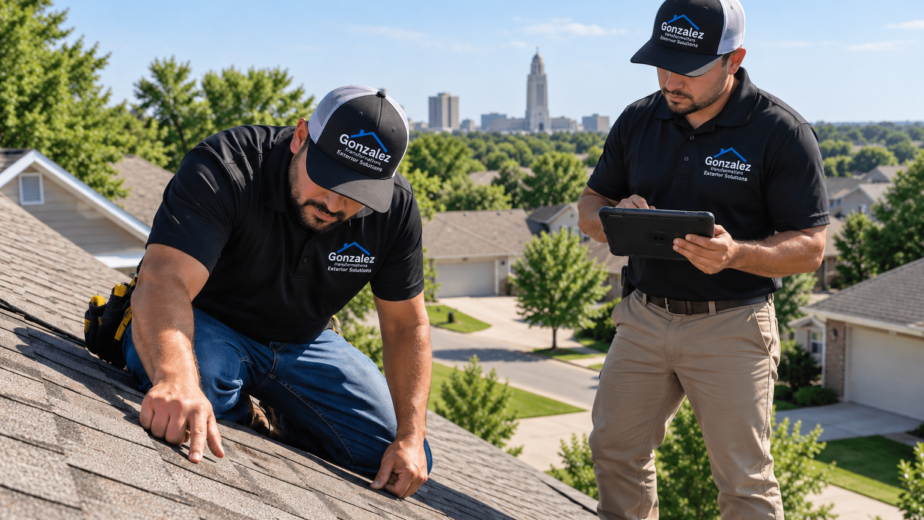
How to Maintain Your Roof and Extend Its Lifespan in Lincoln, Nebraska
Protect Your Investment with Simple Roof Maintenance
Your roof is one of the most important parts of your home. It protects your property from rain, snow, wind, and extreme temperatures. However, without regular maintenance, small roofing issues can develop into expensive problems.
For homeowners in Lincoln, Nebraska, seasonal weather changes make roof maintenance especially important. Spring storms, summer heat, fall debris, and winter snow can all affect the condition of your roofing system.
The good news is that a few preventive steps can help you identify potential problems early and extend your roof’s lifespan.
Key Takeaways
- Schedule a professional roof inspection at least once a year.
- Clean your gutters regularly to prevent water buildup and drainage problems.
- Trim tree branches that could damage shingles during strong winds.
- Check attic ventilation to help control heat and moisture.
- Inspect your roof after hailstorms and other severe weather events.
- Address minor roofing problems before they lead to more extensive damage.
Your roof is one of the most expensive components of your home, yet it’s also one of the most neglected. The good news? A little preventive maintenance can add years to your roof’s lifespan and save you thousands in premature replacement costs. Here’s what Lincoln, NE homeowners should be doing to keep their roofs in top shape.
Schedule Annual Professional Inspections
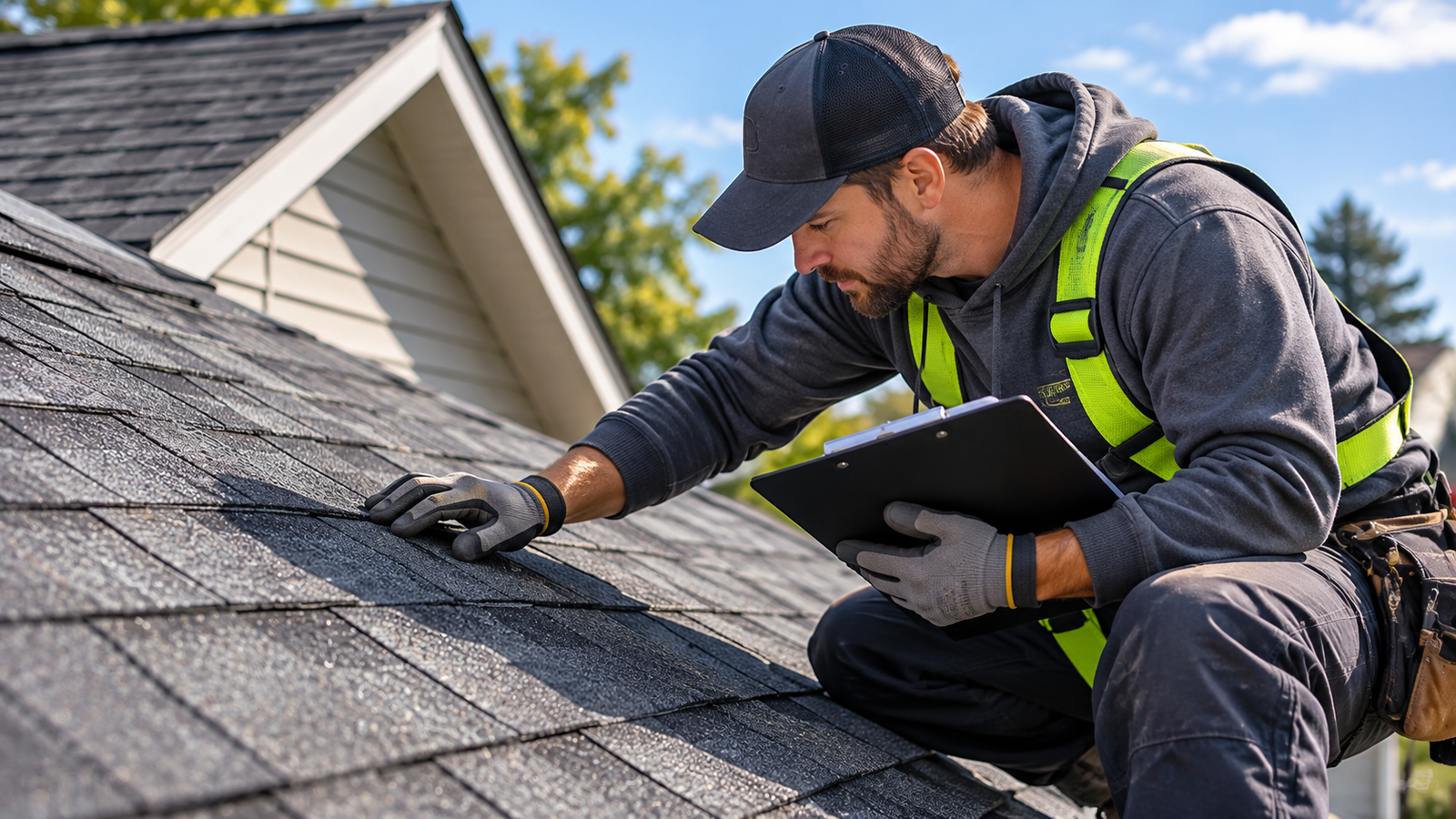
Even if your roof looks fine from the ground, hidden issues like cracked flashing, deteriorating underlayment, or loose shingles can go unnoticed until they cause real damage. We recommend scheduling a professional roof inspection at least once a year — ideally in spring after Nebraska’s harsh winter season.
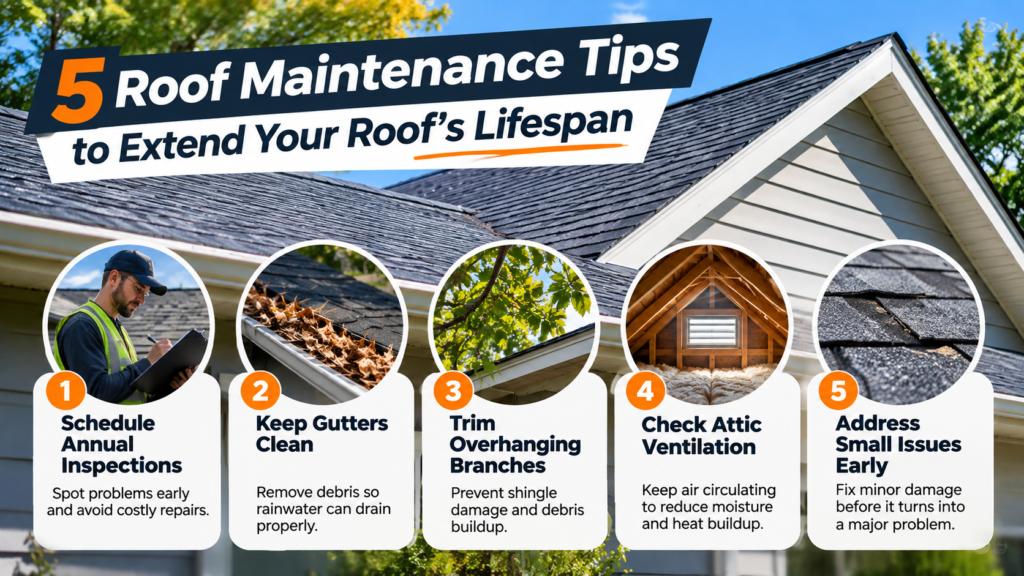
5 Essential Roof Maintenance Tips for Homeowners
1. Schedule Annual Professional Roof Inspections
Even if your roof looks fine from the ground, hidden issues can go unnoticed. Cracked flashing, deteriorating roofing materials, and loose or missing shingles may eventually lead to water damage.
We recommend scheduling a professional roof inspection at least once a year. Spring is a good time to check for damage left behind by Nebraska’s winter weather.
It is also important to consider an additional inspection after severe weather, especially if your home has experienced hail or strong winds.
A professional inspection can help identify potential problems before they become more expensive to address.
2. Keep Your Gutters Clean
Clogged gutters can prevent rainwater and melting snow from draining properly. When water backs up near the roof edge, it can contribute to moisture problems, fascia damage, and ice dams during colder months.
To help prevent these issues:
- Clean your gutters at least twice a year, especially in spring and fall.
- Remove leaves, branches, and other debris.
- Check that downspouts direct water away from your home.
- Look for loose or sagging gutter sections.
- Make sure water can flow freely through the drainage system.
Clean gutters help protect not only your roof but also your home’s exterior and foundation.
3. Trim Overhanging Tree Branches
Trees can add beauty and shade to your property, but branches that hang too close to your roof may create maintenance problems.
During strong Nebraska winds, branches can scrape against shingles or break and fall onto the roof. Leaves and other debris can also accumulate and trap moisture.
Keep nearby branches properly trimmed and remove dead or damaged limbs when necessary. If branches are large or difficult to reach, consider hiring a professional tree service.
This can help reduce the risk of roof damage and keep debris from accumulating in your gutters.
4. Check Your Attic Ventilation
Proper attic ventilation helps regulate temperature and moisture levels inside your home.
When warm, humid air becomes trapped in the attic, it can contribute to condensation, mold growth, and damage to wooden roofing structures. During summer, excessive attic heat can also affect your home’s energy efficiency.
Make sure your attic ventilation system is working properly. This may include checking soffit vents, ridge vents, and other ventilation openings for blockages.
Common signs of attic ventilation problems include:
- Excessive heat inside the attic during summer.
- Moisture or condensation on attic surfaces.
- Musty odors or visible mold.
- Frost buildup on attic surfaces during winter.
- Uneven indoor temperatures.
If you notice these warning signs, a professional inspection can help determine whether your ventilation system needs attention.
5. Address Small Roofing Problems Early
A missing shingle, damaged flashing, or small leak may seem like a minor issue, but roofing problems can become more serious when left unattended.
Water can enter through damaged areas and affect insulation, ceilings, and wooden structures.
Watch for warning signs such as:
- Missing, cracked, or curling shingles.
- Damaged flashing around chimneys and vents.
- Water stains on ceilings or walls.
- Granule buildup around downspouts.
- Visible sagging or damaged roof sections.
If you notice any of these signs, consider having your roof inspected by a professional. Addressing damage early can help prevent more extensive repairs.
Roof Maintenance Checklist: What Should You Check?
A simple maintenance routine can make it easier to keep track of your roof’s condition throughout the year.
Use this checklist as a general guide:
| Maintenance Task | Recommended Frequency | What to Check |
|---|---|---|
| Inspect shingles | Twice a year | Missing, cracked, or curling shingles |
| Clean gutters | At least twice a year | Leaves, debris, and proper drainage |
| Check flashing | Once a year | Loose or damaged flashing |
| Trim tree branches | As needed | Branches touching or hanging close to the roof |
| Check attic ventilation | Once a year | Moisture, condensation, and blocked vents |
| Look for signs of leaks | After severe weather | Water stains, damp insulation, or ceiling damage |
You do not need to climb onto your roof to perform these basic visual checks. For safety, leave close-up inspections and repairs to qualified roofing professionals.
Seasonal Roof Maintenance Tips for Nebraska Homeowners
Lincoln experiences different weather conditions throughout the year. Adjusting your maintenance routine by season can help prepare your roof for changing temperatures and weather events.
Spring: Check for Winter Damage
After winter, inspect your roof for missing shingles, damaged flashing, clogged gutters, and signs of water infiltration.
Spring is also a good time to schedule a professional inspection and address problems before the next round of storms.
Nebraska homeowners should also pay close attention to their roofs after severe weather. Learn what to do after a hailstorm in Lincoln to understand how to identify potential damage and protect your property.
Summer: Watch for Heat and Ventilation Problems
High temperatures and direct sunlight can put additional stress on roofing materials.
Check your attic ventilation and look for visible signs of shingle deterioration. Proper airflow can help manage attic temperatures and moisture levels.
Fall: Prepare for Colder Weather
Before winter arrives, clean your gutters, remove accumulated leaves, and trim nearby tree branches.
Make sure your drainage system is working properly so rainwater and melting snow can flow away from your home.
Winter: Monitor Snow and Ice Conditions
Snow and freezing temperatures can create additional challenges for homeowners.
Watch for ice dams, icicles along roof edges, and signs of moisture inside your home. Avoid climbing onto an icy roof or attempting dangerous snow removal.
If you notice signs of damage or water infiltration, contact a roofing professional.
Why Is Attic Ventilation Important for Your Roof?
Attic ventilation is an important part of a healthy roofing system. It allows air to circulate and helps manage heat and moisture throughout the year.
Without proper ventilation, moisture can accumulate inside the attic and contribute to condensation, mold, and deterioration of wooden components.
During warmer months, excessive heat buildup may also affect indoor comfort and increase the workload on your cooling system.
If you notice persistent moisture, musty odors, or unusually high attic temperatures, consider having your ventilation system evaluated by a professional.
When Does Roof Maintenance Become a Roof Repair?
Routine maintenance helps identify potential problems, but some situations require professional repairs.
For example, cleaning gutters and checking shingles can help prevent issues. However, missing shingles, damaged flashing, persistent leaks, and storm damage may require additional attention.
Here are some situations that should not be ignored:
- Missing or damaged shingles: These can expose underlying roofing materials to rain and wind.
- Damaged flashing: Loose or deteriorated flashing can allow water to enter around chimneys, vents, and other openings.
- Water stains: Brown spots on ceilings or walls may indicate a roof leak.
- Sagging areas: Visible changes in the roofline may indicate a more serious structural issue.
If your roof has recurring problems or extensive shingle damage, it may be time to consider a replacement. Read our guide on signs that your roof may need replacement to learn what homeowners should look for.
If you notice these warning signs, a professional assessment can help determine the next steps.
Frequently Asked Questions About Roof Maintenance
How often should I inspect my roof?
Most homeowners should schedule a professional roof inspection at least once a year. You should also check for visible damage after major storms, hail, or strong winds.
What is included in a basic roof maintenance checklist?
A basic checklist includes inspecting shingles, cleaning gutters, checking flashing, trimming nearby tree branches, checking attic ventilation, and looking for signs of leaks or water damage.
Can poor attic ventilation damage my roof?
Yes. Poor ventilation can contribute to moisture buildup, condensation, and excessive heat inside the attic. Over time, these conditions may affect roofing materials and wooden structures.
Should I inspect my roof after a hailstorm?
Yes. Hail can damage shingles, flashing, gutters, and other roofing components. Some damage may not be easy to identify from the ground, so a professional inspection can help detect potential problems.
How can I extend the lifespan of my roof?
Regular inspections, clean gutters, proper attic ventilation, and timely repairs can help extend the lifespan of your roofing system. The exact lifespan also depends on the roofing material, installation quality, and local weather conditions.
Free Roof Inspections from Gonzalez Transformations
Regular roof maintenance can help you identify potential problems and protect your home throughout the year. However, some issues require the experience of a professional roofing contractor.
At Gonzalez Transformations, we offer free roof inspections for homeowners in Lincoln, NE, and surrounding areas. Our team can evaluate your shingles, flashing, gutters, ventilation, and other roofing components to help you understand the condition of your roof.
If you have noticed damaged shingles, possible leaks, or signs of storm damage, contact our team to discuss your roofing needs.
If a storm has caused visible damage to your property, understanding how to file a roof insurance claim in Nebraska can also help you prepare the necessary documentation.
Schedule your free inspection today or call us at (402) 416-1954.