What Causes Roof Leaks? 7 Common Problems Nebraska Homeowners Should Know
What Causes Roof Leaks? 7 Common Problems Nebraska Homeowners Should Know
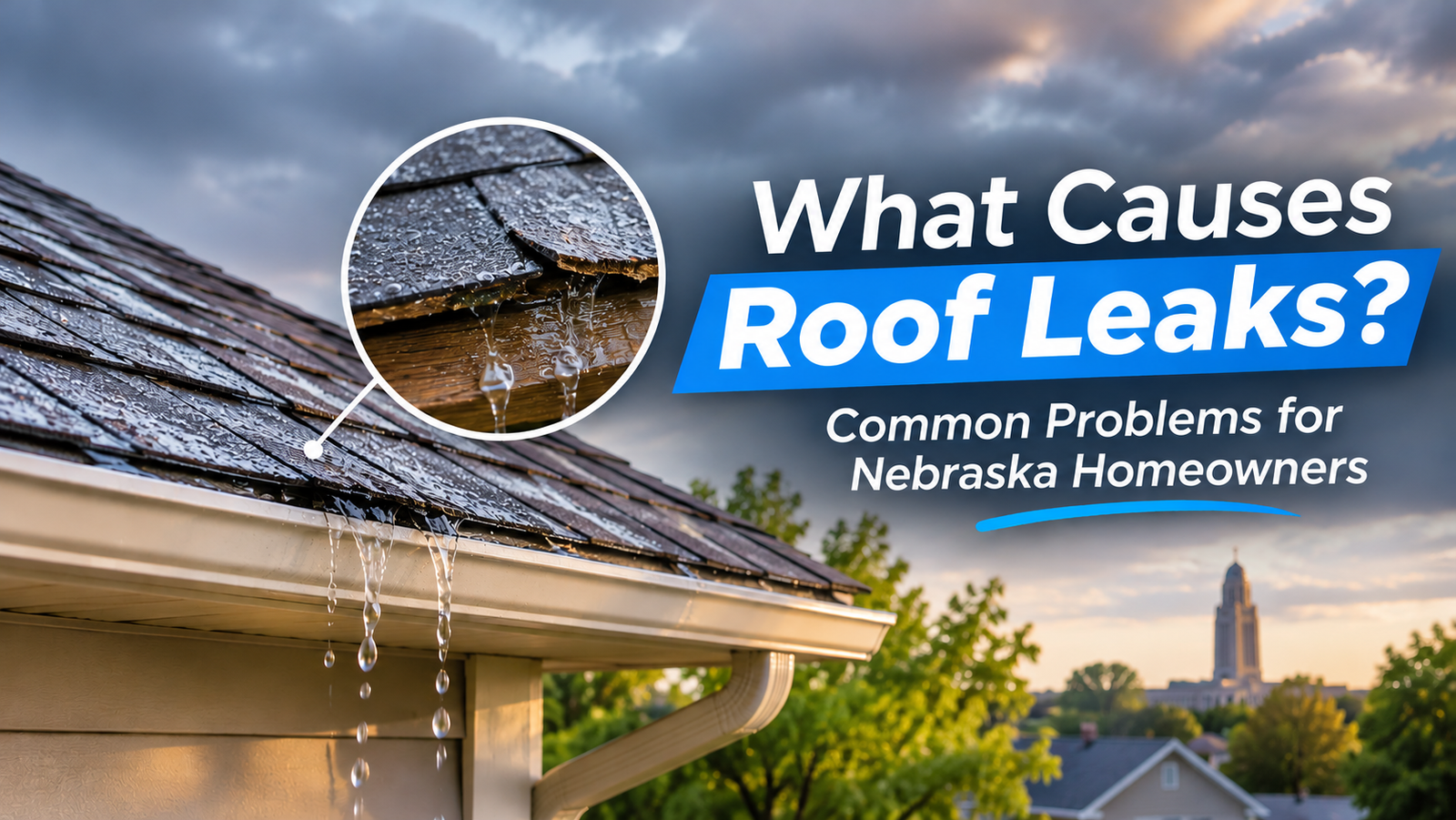
A roof leak can start with a small problem, but it can quickly lead to costly damage if left untreated. From damaged shingles to clogged gutters, several roofing issues can allow water to enter your home.
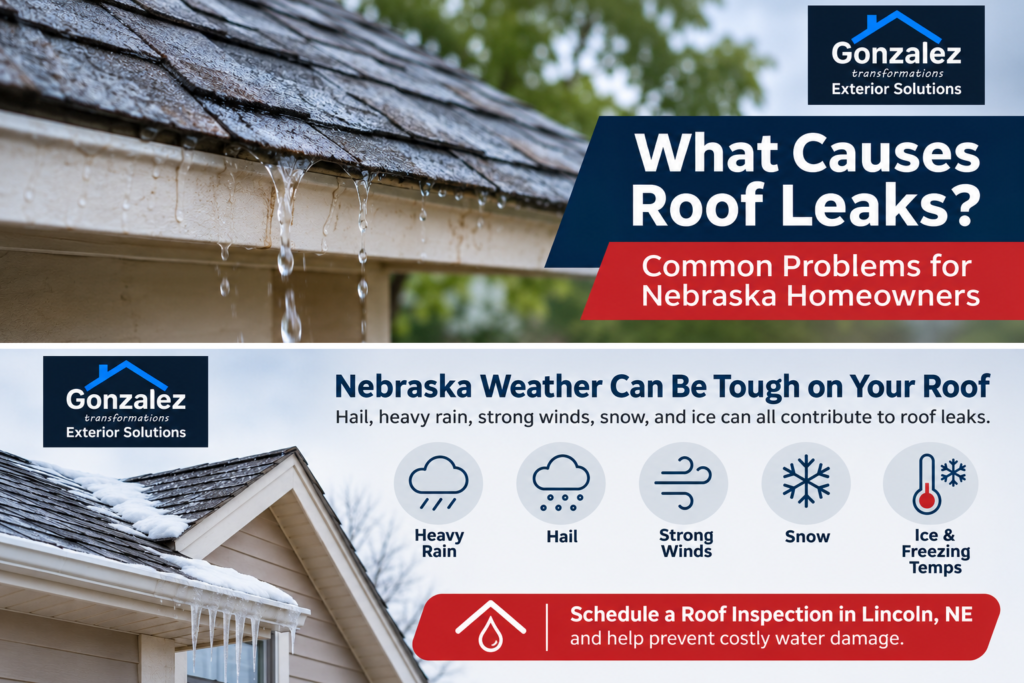
For homeowners in Lincoln, Nebraska, changing weather conditions such as heavy rain, hail, strong winds, snow, and freezing temperatures can put additional stress on a roof.
But what causes roof leaks, and how can you recognize the problem before it gets worse?
In this guide, we explain seven common causes of roof leaks, the warning signs to look for, and what homeowners can do to protect their property.
Key Takeaways
- Damaged shingles and flashing are two common reasons water can enter a roofing system.
- Clogged gutters and damaged roof vents can create openings or drainage problems that contribute to leaks.
- Nebraska weather, including hail, heavy rain, snow, and ice, can increase the risk of roofing damage.
- A roof leak does not always mean you need a new roof. Some problems can be fixed with targeted repairs.
- Early inspections matter. Finding the source of a leak quickly can help prevent additional damage to ceilings, insulation, and other parts of your home.
7 Common Causes of Roof Leaks
A roof leak happens when water gets past the roofing system and enters areas that should remain protected. The source may be a damaged shingle, a failed seal, a drainage issue, or a problem with the roof’s installation.
Here are seven common causes homeowners should know.
1. Damaged or Missing Roof Shingles
Asphalt shingles protect your home from rain, wind, and other outdoor elements. However, they can become damaged over time.
Strong Nebraska winds and hailstorms can loosen, crack, or completely remove shingles. When this happens, water may reach the layers underneath the roofing material and eventually enter your home.
Common warning signs include:
- Missing shingles after a storm.
- Cracked or curling shingles.
- Loose roofing materials.
- Shingle granules collecting in your gutters.
Even if the damage looks minor, exposed areas can allow moisture to enter your roof system.
2. Cracked or Damaged Roof Flashing
Roof flashing is the metal material installed around areas where your roof meets another surface, such as chimneys, vents, skylights, and walls.
Its main purpose is to direct water away from these vulnerable areas.
Over time, flashing can crack, loosen, rust, or separate from surrounding roofing materials. When this happens, rainwater can seep through small openings and cause leaks.
Flashing problems are especially important to check because water may enter around a chimney or roof vent even when the surrounding shingles look fine.
3. Clogged or Damaged Gutters
Gutters collect rainwater and direct it away from your roofline and foundation.
When gutters become clogged with leaves, branches, and debris, water cannot drain properly. It may overflow or back up toward the edge of your roof.
During colder months, trapped water can freeze and contribute to ice buildup along the roof edge. This can increase the risk of water entering beneath roofing materials.
Signs of gutter-related problems include:
- Water overflowing during rainfall.
- Sagging or loose gutters.
- Water stains near the roofline.
- Ice buildup along the edges of your roof.
Keeping your gutters clean and in good condition helps your roofing system manage water more effectively.
4. Damaged Pipe Boots and Roof Vents
Your roof has several openings that allow pipes, vents, and other components to pass through its surface.
These areas are typically sealed with protective materials called pipe boots or roof vent flashing.
Over time, rubber seals can crack, dry out, or deteriorate due to sun exposure and changing temperatures. When the seal fails, water can enter around the pipe or vent.
You may notice a ceiling stain or a small leak that appears during heavy rainfall.
5. Ice Dams and Winter Weather
Nebraska winters can be tough on residential roofs. Snow, freezing temperatures, and repeated freeze-thaw cycles can create conditions that increase the risk of water intrusion.
An ice dam forms when snow melts on a warmer section of the roof and then refreezes near the colder roof edge. As ice builds up, melting water may become trapped behind it.
That water can sometimes work its way beneath shingles and enter the attic or interior of your home.
Warning signs of ice dam problems include:
- Large ice buildup along roof edges.
- Water stains on ceilings or walls during winter.
- Icicles forming along gutters.
- Moisture or damp insulation in the attic.
Proper attic insulation and ventilation can help reduce the conditions that contribute to ice dams.
6. Poor Roof Installation or Previous Repairs
A roof is only as reliable as its installation.
If shingles, flashing, underlayment, or other roofing components are not installed correctly, small gaps may develop where water can enter.
Improperly sealed roof penetrations and poorly installed flashing are common areas of concern.
Problems may not appear immediately. In some cases, homeowners only notice them after months of heavy rain or severe weather.
Proper installation and attention to detail help protect your home from future water damage.
7. Aging Roofing Materials
No roof lasts forever. Over the years, exposure to sunlight, wind, rain, hail, and temperature changes gradually affects roofing materials.
As asphalt shingles age, they may lose protective granules, become brittle, crack, or start to curl.
Other roofing components, including flashing and protective underlayment, can also deteriorate.
When several parts of a roofing system begin to fail, the risk of leaks increases. If your roof is older and you are experiencing recurring leaks, a professional evaluation can help determine whether repairs or replacement make more sense.
Common Roof Leak Causes: Warning Signs and Possible Solutions
The following table summarizes common roofing problems, what homeowners may notice, and the type of work that may be needed.
| Roof problem | Common warning signs | Possible solution |
|---|---|---|
| Damaged shingles | Missing, cracked, or curling shingles | Shingle repair or replacement |
| Damaged flashing | Leaks near chimneys, vents, or skylights | Flashing repair or replacement |
| Clogged gutters | Overflowing water or ice buildup | Gutter cleaning or repair |
| Damaged pipe boots | Leaks around roof pipes or vents | Replace damaged seals or components |
| Ice dams | Ice buildup and winter water stains | Address ice buildup and evaluate insulation and ventilation |
| Poor installation | Recurring leaks around roof details | Correct installation or repair work |
| Aging materials | Widespread wear and recurring leaks | Roof condition assessment and possible replacement |
Note: These are general examples. The right solution depends on the roof’s condition and the actual source of the leak.
How Can You Tell Where a Roof Leak Is Coming From?
Finding the exact source of a roof leak can be more difficult than it seems.
For example, a water stain on your bedroom ceiling does not necessarily mean the roof is damaged directly above that spot. Water can travel along roof decking, rafters, and other surfaces before becoming visible inside your home.
Here are a few signs homeowners should pay attention to:
- Water stains: Brown or yellow marks on ceilings and walls may indicate moisture intrusion.
- Peeling paint: Bubbling or peeling paint near the ceiling can be a sign of water damage.
- Musty odors: Persistent damp smells may indicate hidden moisture.
- Wet attic insulation: Insulation that feels damp or shows discoloration may point to a roof leak.
- Visible roof damage: Missing shingles or damaged flashing can indicate possible entry points for water.
If you notice any of these signs, avoid climbing onto your roof to investigate. Roof surfaces can be slippery and dangerous, especially after rain or during winter.
A professional roofer can inspect the affected areas and help determine the source of the leak.
What Should You Do When Your Roof Starts Leaking?
If you discover a roof leak, taking action quickly can help limit additional damage.
Here are four steps to follow:
1. Protect the area inside your home. Move furniture, electronics, and personal belongings away from the leak. Place a bucket or container under active drips.
2. Document the damage. Take photos of water stains, damaged ceilings, and any visible interior damage. This information may be useful if you need to contact your insurance company.
3. Avoid attempting roof repairs yourself. Climbing onto a wet or damaged roof can be dangerous. Leave roof inspections and repairs to trained professionals.
4. Schedule a professional roof inspection. A roofing contractor can identify the source of the leak and recommend the appropriate solution.
The sooner you address a roofing problem, the better your chances of preventing moisture from causing additional damage to your home.
When Should You Call a Roofing Contractor in Lincoln, NE?
Not every roof leak requires a full roof replacement. Some problems can be resolved with targeted repairs, such as replacing damaged shingles, repairing flashing, or addressing vulnerable areas around roof penetrations.
However, recurring leaks, widespread shingle deterioration, or extensive storm damage may require a more detailed assessment.
Gonzalez Transformations provides roofing and exterior remodeling services for homeowners in Lincoln, Nebraska, and surrounding communities. The team can help assess roofing concerns and provide an estimate based on the condition of your roof.
Whether you are dealing with a roof leak, damaged shingles, or storm-related roofing issues, getting the problem evaluated is an important first step.
Contact Gonzalez Transformations today to request your FREE roofing estimate.
Call (402) 416-1954 or request an estimate through the website.
Frequently Asked Questions About Roof Leaks
What is the most common cause of roof leaks?
Damaged or missing shingles, deteriorating flashing, clogged gutters, and aging roofing materials are common causes of roof leaks. The exact cause depends on the roof’s condition and exposure to weather.
Can a roof leak happen without missing shingles?
Yes. A roof can leak even when all shingles appear intact. Damaged flashing, cracked pipe boots, loose seals, or problems with underlayment can allow water to enter your home.
Can heavy rain cause a roof leak?
Heavy rain can reveal existing roofing problems. If shingles are damaged, flashing is loose, or gutters are not draining properly, water may find its way into your home.
Are roof leaks common during Nebraska winters?
Winter conditions can increase the risk of roof leaks. Snow accumulation, ice dams, freezing temperatures, and repeated freeze-thaw cycles can contribute to water intrusion.
Should I repair or replace my roof if it is leaking?
It depends on the extent of the damage, the age of your roof, and the condition of the roofing materials. Minor problems may only require repairs, while widespread deterioration may make replacement a better long-term option. A professional inspection can help you understand your options.
How quickly should I fix a roof leak?
You should address a roof leak as soon as possible. Even a small leak can lead to damaged insulation, wood rot, mold growth, and more expensive repairs if ignored.
Can clogged gutters cause roof leaks?
Yes. Clogged gutters can prevent water from draining properly. Overflowing or backed-up water can contribute to moisture problems around the roof edge, especially when combined with ice buildup during winter.
How do I know if a roof leak is coming from flashing?
Leaks near chimneys, skylights, roof vents, or walls may indicate a flashing problem. However, water can travel before becoming visible indoors, so a professional inspection is the best way to identify the source.
Need Help With a Roof Leak in Lincoln, NE?
Don’t wait for a small roofing problem to become a bigger issue. Contact Gonzalez Transformations to discuss your roofing concerns and request a free estimate.